How to Cover a Cake with Sugarpaste

How to cover a cake in sugarpaste

I’ve already shown you how to marzipan and cover a fruit cake with sugarpaste when we were making Christmas cakes last year (post here) but it’s useful to be able to cover sponge cakes with sugarpaste too.  The preparation is a little different so here’s how to….

You will need:

Cake

Buttercream or Frosting - Chocolate, Vanilla or Cream Cheese

Serrated bread knife

Palette knife
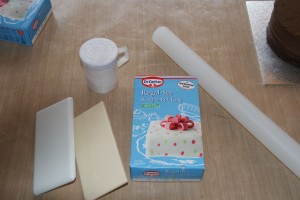
A large smooth rolling pin.

Icing Smoother

To begin with you will need to level and fill your cake.  It’s best if the cakes are still in the tins you baked them in.

Take a serrated bread knife and trim off the domed tops, keeping the knife level across the tin. (You can feed these trimmings to the children, yourself or crumble them up to make cake pops – they won’t go to waste!)

If the cake sits below the edge of the tin try dropping in a couple of cake boards or impromptu kitchen paraphenalia (a small plate, jar lids etc) below the cake so that it sits at the right height to level.
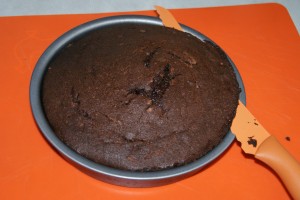
Take the cake that will be the base and add a layer of frosting or buttercream.  I place it onto a flexible chopping board to make it easier to work on and maneovre but you could just as easily use a plate.
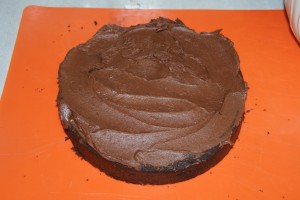
Place the second cake on top with the flat base as the top.
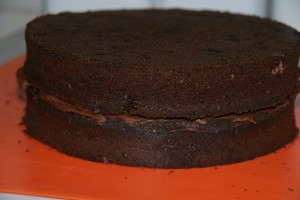
Now chill the cake in the fridge for half an hour.  This will make coating the sides and top much easier as the cake is firmer and less likely to shred into crumbs.

Once chilled begin by adding a smooth layer of frosting to the top.  Smoothing it roughly to begin with a palette knife.
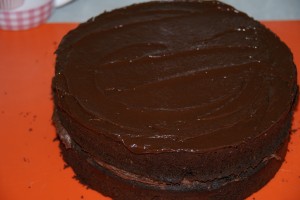
Now turn your attention to the sides spreading the frosting with the palette knife, continue working your way around.  Use the edge of the palette knife in an almost scraping action to smooth out the frosting.  Add in little dollops of frosting to any areas that are still indented and work until you have a smooth straight edge.
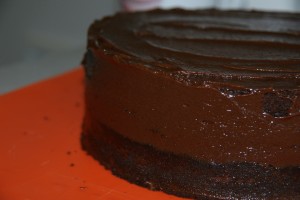
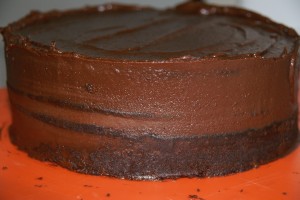
You want to be left with a thin layer of frosting coating the sides, in places you will be scraping off frosting as you smooth.  Discard this into a small bowl.

Once the sides are as smooth and even as you can get them return your attention to the top and smooth in around the outside edge until the top is even again.
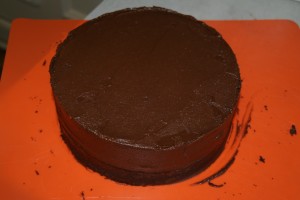
Place the cake back in the fridge for an hour or so until the frosting is firm.
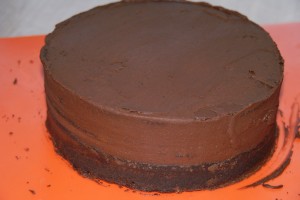
Now to cover with sugarpaste.  Transfer the chilled cake to a cake board.  Lightly dust your surface with a little icing sugar.  Not too much as it dries out sugarpaste very quickly and will make it crack.  You could also use a special non-stick mat which cuts down on icing sugar usage!

Knead your chosen sugarpaste until it has softened up and is pliable ready to use.

Roll it out using a smooth rolling pin – you are aiming for a thickness of 5-7mm.  If you’re decorating a lot of cakes it’s worth investing in a special sugarpaste non-stick rolling pin.  They’re much bigger and smoother (and non-stick) than regular kitchen rolling pins.
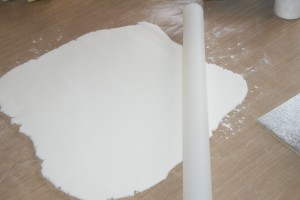
Measure the size you will need your sugarpaste to be by taking a piece of string and measuring up one side of the cake, over the top and down the opposite side.

Try not to roll out your sugarpaste much bigger than you need it otherwise the excess will cause a lot of cracking and ripping when it comes to covering.

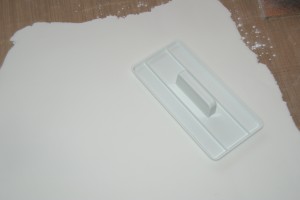
Once the sugarpaste is the correct size take an icing polisher/smoother and work it over the surface gently evening out any marks/lumps/bumps!
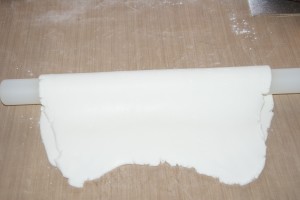
Place the rolling pin in the middle of the sugarpaste and flip it over as you would with pastry.
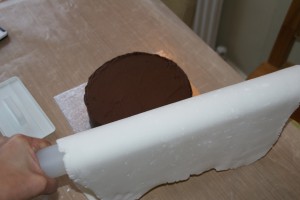
Now offer up the sugarpaste to the cake, start at the base of one side and unflip the sugarpaste gently over the cake.
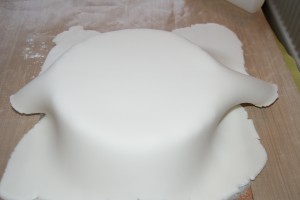
Using the flat of the your hand gently smooth the sugarpaste on the top of the cake.

Cup your hands and begin to smooth the sides beginning with just the very top edge of the cake.
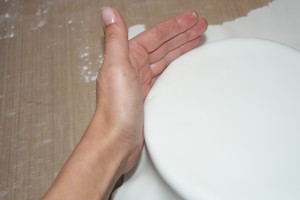
Gradually move your hands in this cupping motion downwards.  Lifting out any creases by lifting the edge of the sugarpaste and smoothing with your cupped hand as you go – the action is similar to swooshing the base of skirt – but less swooshy and more carefully!

Work slowly and carefully until you reach the base of the cake.

Sugarpaste is often likely to start to crack around the top edges as this is where the stress point is.  Cracks can be healed back together by rubbing them gently with your fingertips in a circular motion.

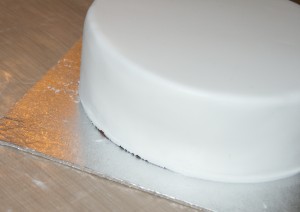
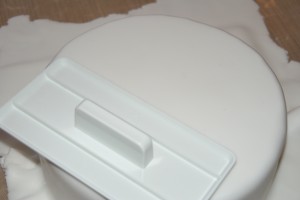
Now start to smooth the top and the sides of the sugarpaste with an icing smoother – this is how the super smooth glossy appearance is created.  As you smooth towards the base a natural line is created for you to trim away the excess.
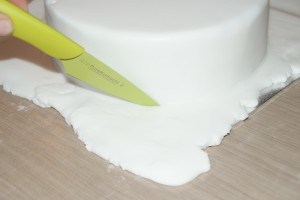
Take a sharp knife and cut away the excess at the base carefully.  Remember if this goes a bit wonky you could always cover it with ribbon.
How to cover a cake in sugarpaste

 That’s it – How to Cover a Cake with Sugarpaste – the decoration bit is up to you!

The Pink Whisk - Ruth Clemens, Baker Extraordinaire

Ruth Clemens, Baker Extraordinaire



Related Posts Plugin for WordPress, Blogger...
Print Friendly
This entry was posted in Cake, Decorating, Sugarpaste, Treats. Bookmark the permalink.

30 Responses to How to Cover a Cake with Sugarpaste

  1. Joanne says:

    thanks for putting this up – have been thinking of making my own christmas cake this year but don’t like fruit cake and have been wondering how to sugapaste a sponge!

  2. Jules says:

    Fantastic tips. I especially like the one about measuring with string. I’d never have thought of that!

  3. Sue says:

    I didn’t think you could cover sponge cake with sugarpaste because sponge is not dense enough. I thought it had to be madeira cake which I find a bit dry. What type of sponge recipe did you use?

  4. Sarah Miles says:

    If you put a little trex or White flora on your work surface you don’t need to use icing sugar, just a teeny amount but prevents sugarpaste from cracking. Also good to stop it sticking to your fingers when adding colours :-) xx

  5. Leanne says:

    Some great tips there – thanks!

    I tend to use cornflour to dust my work surfaces, purely because it’s less sticky when cleaning up afterwards!

  6. niamh stott says:

    hi Ruth,great tips..wish i had those tips a few weeks ago when i had to cover my sons chocolate sponge cake with fondant and decorate it “ninja” style!! (thank god for lego!) will use your tips for my xmas cakes.

  7. Zoey Sheehan says:

    I have been trying and practicing this for ages, ready for the cake I am making for my friends wedding in November, I make one tall cake, split and fill it. Do the crumb coat as you suggest above but always seem to get a bulge where the top and bottom meet, any ideas what I may be doing wrong as it is beginning to stress me out!

    • Its tricky avoiding the middle bulge but make sure you’re using a buttercream using a butter not a marg, don’t overfill the middle, apply the crumb coat and then chill until very firm. That holds the buttercream in place whilst you cover it. The bulge is created when there is too much filling that is too soft – the sugarpaste allows it to start squeezing out xx

  8. nikki says:

    thanks for this – just what i needed before doing my sons cake – was going to use raspberry jam over the cake to attach the sugerpaste too – had never thought to continue with the buttercream (btw, which is better to use for buttercream, salted butter or non salted?)
    just wish i had a decent cooker so that my sponges wud rise evenly :o ( xx

  9. Tracey says:

    This is really helpful! I´ve just started getting into cake decorating and this is a really useful step-by-step guide!

  10. Rachel says:

    I love this site!!! I’m making my daughters christening cake, do you have a Madeira recipe that can be easily doubled as I’m planning on a large rectangle. Also as it will be too large to slice in half, is it possible to put a layer of jam prior to buttercream and fondant?

  11. Gerry says:

    Thank you so much for this Ruth!!!! Made your chocolate cake, frosting from the pomegranate cupcakes and going to cover it with fondant for my sister’s Engagement. Hope all goes well.

  12. Joann Hickman says:

    Hi I’m making my son’s birthday cake one fruit the other madeira cake and I’ve been told to marzipan the madeira cake before I sugarpaste it, is that right

  13. charlene says:

    Hi ruth, love the site. Was just wondering, after you leave the cake in the fridge for an hour for the buttercream to harden, will you need to wet it before applying sugarpaste? am making choco cake with Nutella buttercream, and am always worried about bulges when first covering in buttercream.
    Thanks

  14. Sara Harrison says:

    please can you tell me how to deal with corners on a square cake?

    • Once you flip the rolled out sugarpaste over the cake smooth the top and then do the corners by cupping your hand around the corner and smoothing each until it fits, ignoring the sides keeping them loose until all 4 corners are done. Then smooth down the sides. x

  15. Sheila Thompson says:

    Love your decorations, can you tell me how to store a cake decorated in sugarpaste, when I’ve used it before it has gone very sticky and shiny after a couple of days. I’m going to decorate my Christmas cake but don’t want to do it at the last minute. Thanks x

  16. Emma Donovan says:

    Finding it hard to get the top of the cake perfect =[ slight dimpling of the fondant, i can only assume where my cake/buttercream coating isn’t perfect?

    • Yes it could be but its difficult to get the buttercream perfect! Try your sugarpaste a little thicker which will give you more to polish and smooth out those lumps and bumps. Also make sure you’re turning the cake over to use the flat base as the top, having something perfectly flat and level as a base before buttercreaming will help x

  17. Emma Donovan says:

    =O i forgot to turn it over! Lol. I was thinking “how the hell am i supposed to cut off the dome perfectly flat?” Lol. Silly me! My next attempt i will use more sugarpaste as well. Fingers crossed as this is practise for my daughter’s first birthday on the 31st of march =]

  18. Roxanne H says:

    Hi, I’m making my sisters wedding cake soon. Making separate layers of fruit, vanilla and chocolate cake. Would sugar paste taste ok for all three types?

    Tempted to do a white choc ganache on the choc and vanilla – will this look too different from the fruit cake?

    Any help would be great! :)

Leave a Reply

Your email address will not be published. Required fields are marked *

You may use these HTML tags and attributes: <a href="" title=""> <abbr title=""> <acronym title=""> <b> <blockquote cite=""> <cite> <code> <del datetime=""> <em> <i> <q cite=""> <strike> <strong>